What Is Bearing Life?
What Is Bearing Life?
How long can a bearing last? This is a concern for every user. Wear is inevitable during the use of bearings, and there seems to be no clear answer to the question of bearing life. So, what exactly is bearing life?
I. What Is Bearing Life?
1. Definition of Bearing Life
Bearing life is defined as the number of revolutions a bearing can achieve, or the operating hours at a specific rotational speed, before signs of metal fatigue (spalling or fracture) appear on one of the bearing rings or rolling elements.
This definition was proposed by SKF, and its life theory has also been adopted by ISO and DIN standards. For easier understanding, bearing life can be divided into "theoretical life" and "actual life".
"Theoretical life" refers to the "rated life" in SKF's life theory. It is the life calculated using life theory formulas under ideal and correct installation conditions, with given operating speed, load, and environment for a specific brand and model of bearing before installation. This life is merely a theoretically calculated value, hence the name "theoretical life".
For modern high-quality bearings, their nominal or basic rated life may differ significantly from the actual service life in a specific application. In a particular application, service life is affected by various factors, including lubrication, contamination level, misalignment, correct installation, and environmental factors. Therefore, ISO 281:1990/Amd 2:2000 includes a modified life equation to supplement the calculation of basic rated life. This life calculation method uses a correction factor that takes into account the bearing's lubrication, contamination, and the fatigue limit of the material.
"Actual life" corresponds to the "operating life" in SKF's life theory. It refers to the time it takes for a specific brand and model of bearing, after being installed on specific equipment, to fail under actual operating speed, load, and working conditions.
2. Factors Affecting Bearing Life
Bearing life is mainly determined by its wear resistance, abrasion resistance, corrosion resistance, etc. Therefore, the common forms of early bearing failure usually include fracture, plastic deformation, wear, corrosion, and fatigue—with contact fatigue being the main form under normal conditions.
Key internal influencing factors include hardness, strength, toughness, wear resistance, corrosion resistance, and internal stress state (excluding service conditions).
3. How to Extend Bearing Service Life?
(1) Lubrication Is Key
Select an appropriate lubrication system and high-quality lubricant. The lubricating oil film separates the contacting surfaces under load and provides necessary protection against corrosion and wear. Therefore, for all rotating or reciprocating parts, especially bearings and gears, a lubricating oil film is indispensable for normal operation.
(2) Reasonable Assembly Matters
Following the equipment manufacturer's manual for assembly, installation, and regular maintenance is an effective way to prevent problems. During assembly or installation, excessive or insufficient internal bearing clearance, or in some cases, excessive preload, may lead to early damage and shortened bearing life. In addition to causing downtime and costly repairs, improper bearing assembly and installation can have more negative effects, such as affecting the operation of other parts and shortening their service life.
(3) Conduct Thorough Inspections
The correct installation of bearings directly affects their service life and the precision of the host equipment. Improper installation will result in bearings with vibration, high noise, low precision, and increasing temperature rise, and there may even be a risk of seizure and burnout. On the contrary, proper installation not only ensures precision but also significantly extends service life. Therefore, bearings must be inspected after installation.
Key inspection items include: verifying the installation position, radial clearance, tightness between the bearing and the shaft shoulder, and checking whether bearing noise, temperature rise, and vibration meet requirements.
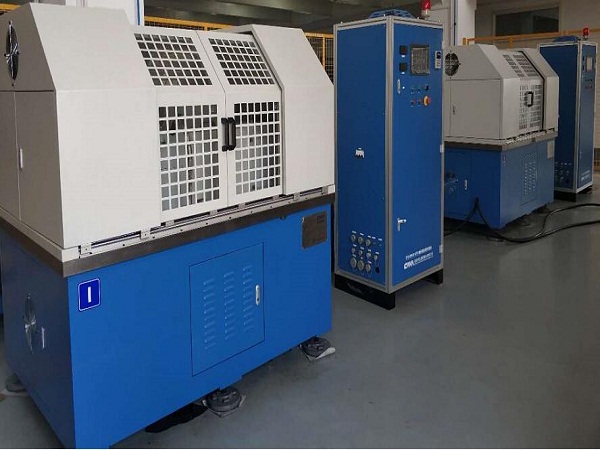
II. Bearing Life Testing Machine
Bearing life, one of the crucial factors for judging bearing quality, can now be measured using specialized equipment. Through simulated life tests of bearings, their comprehensive performance can be evaluated, detected product defects can be promptly improved, and product quality can be optimized.
A bearing life testing machine is equipment used to conduct rotational fatigue life tests on bearings under load. By performing accelerated or simulated operation of bearings in simulated environments and working conditions, it evaluates the dynamic performance closely related to bearing service life, including high-speed performance, high-temperature resistance, and comprehensive performance.
Through the above introduction, you may have a preliminary understanding of what bearing life is. Before leaving the factory, manufacturers conduct factory inspections on various performances of bearings, and the bearing life testing machine is one of the key equipment used. Luoyang Kaiyuan Intelligent Precision Machinery Co., Ltd. researches and produces automatic bearing testing machines and bearing life testing machines. Welcome customers to consult and learn more.
Functions and Performance of Automotive Hub Bearing Testing Machines
Test Procedures and Precautions for Bearing Testing Machines
Related Article