Transmission Modes and Process Flow of Railway Bearing Assembly Lines
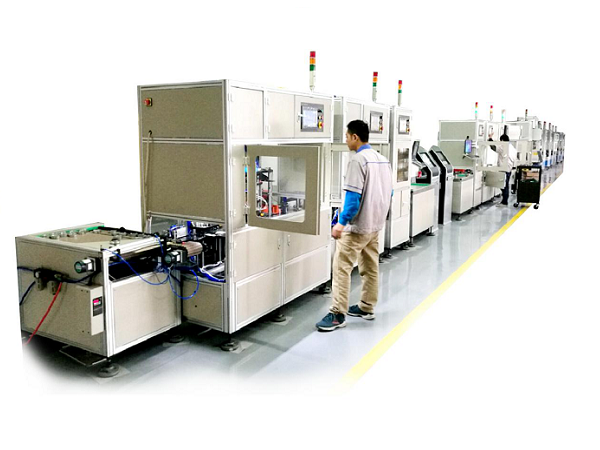
A railway bearing assembly line is an efficient combination of human resources and machinery. During the entire operation of the equipment, it organically integrates on-line special machines, accompanying fixtures, testing equipment, and the entire conveying system to meet the assembly requirements of multi-variety products, fully reflecting the flexibility and overall performance of the entire equipment. What methods does the railway bearing assembly line use to organically combine the entire system? This time, the editorial team from Kaiyuan will specifically explain the transmission modes and process flow of the bearing assembly line for you.
I. Transmission Modes of Railway Bearing Assembly Lines
- Workstation Allocation
The line balancing of railway bearing assembly lines is a problem associated with facility layout. The core of line balancing is to assign all basic work units to each workstation. The total workload to be completed by one workstation is consistent with the total number of basic work units assigned to it, ensuring that each workstation is fully occupied within the cycle time (i.e., the interval between two adjacent products passing through the end of the assembly line), completes the maximum amount of operations, and thereby minimizes the idle time of each workstation.
- Inter-Machine Balancing
Closely linked to facility planning, the balancing of railway bearing assembly lines aims to achieve maximum balance among workers or machines. Only in this way can the output of the assembly line meet the required level. The balance of the assembly line directly affects the productivity of the manufacturing system. The transmission modes of railway bearing assembly lines can be synchronous (forced) or asynchronous (flexible).
II. Process Flow of Railway Bearing Assembly Lines
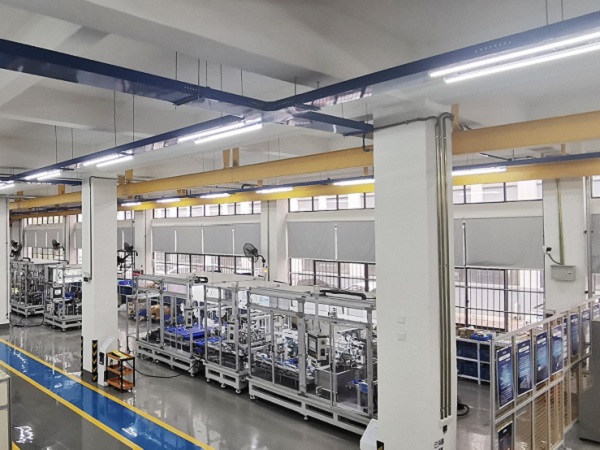
The assembly line assembles and tests double-row tapered roller railway bearings. The equipment of the railway bearing assembly line includes main line equipment, auxiliary equipment, and electrical control systems. Its assembly line process flow is as follows:
Matching → Bearing Information Entry → Inner Diameter Inspection → Blow-Drying & Cleaning → Spacer Ring Matching → Assembly Height & Axial Clearance Inspection → Cleaning & Blow-Drying → Weighing → Greasing & Grease Homogenization → Weighing → Seal Cover Installation & Torque Testing.
The above is a comprehensive introduction to the transmission modes and process flow of railway bearing assembly lines. Kaiyuan Intelligent provides fully automatic robotic feeding and assembly for bearing components. The entire line is fully automated, capable of identifying the part numbers of inner and outer rings, ensuring data traceability for each workpiece. Choosing Kaiyuan Intelligent's assembly line is worthy of customers' trust.
How Do Bearing Testing Machines Measure Bearing Dimensions? Introduction to Measurement Methods
Selection Methods and Purchasing Tips for Bearing Testing Machines
Related Article