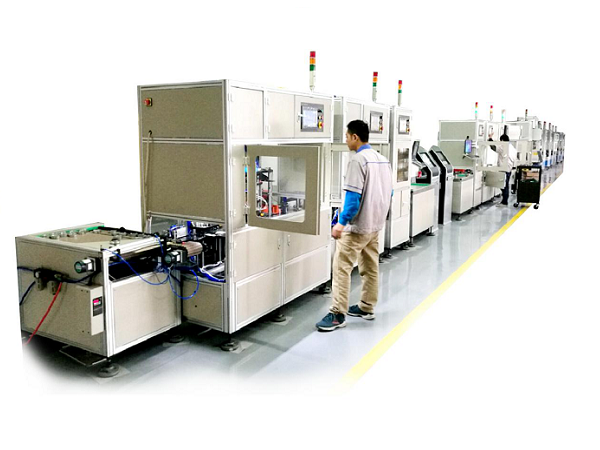
Types and Technologies of Bearing Testing Machines
A bearing testing machine is an instrument used to test the quality or performance of bearings before they are put into service, preventing non-functional issues after installation. Below, the editorial team from Kaiyuan will explain the types of bearing testing machines and the technologies they employ.
I. Types of Bearing Testing Machines
Regardless of the type, bearing testing machines share similar core structures, drive technologies, and control technologies. Common types include service life testers, performance testers, simulation testers, and component testers. Their main structure consists of bearings and supporting components—this core part determines the machine’s load capacity and rotational speed. Based on their structural design, they are primarily classified into three categories:
- Bridge-Structure Testing Machines
Suitable for high-speed tests with high machining precision, these machines can test multiple sets of bearings simultaneously (e.g., cylindrical roller bearings, angular contact bearings, or deep groove ball bearings). They are commonly used as service life testers.
- Cantilever-Structure Testing Machines
Featuring easy installation, disassembly, and testing, these machines can only test one set of bearings at a time. They are ideal for performance tests such as inner ring temperature, oil film thickness, lubrication status, or shaft center trajectory measurement.
- Combined-Structure Testing Machines
Structurally similar to bridge-type testers, they are equipped with three movable blocks inside a square box, enabling a wide range of bearing tests. However, their rotational speed is relatively low, making them unsuitable for high-speed requirements—excessive speed can cause significant machine vibration and affect test accuracy.
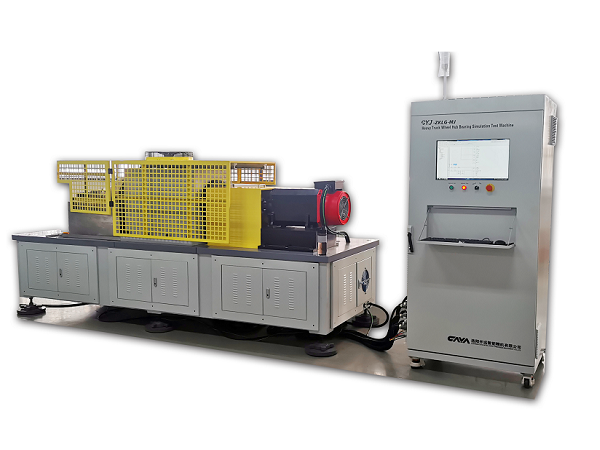
II. Key Technologies of Bearing Testing Machines
- Testing Technology
As the core technology of bearing testing machines, testing technology directly impacts test accuracy. Common testing methods utilize computers with interface circuits connected between the computer and sensors to determine test precision and frequency. Specific approaches include:
- Single-chip microcomputer testing
- Direct computer testing
- Computer network testing
- Loading Technology
Load capacity is a primary indicator of bearing testing machines, and loading precision and speed directly influence test result reliability. Loading systems vary drastically in price based on their precision and speed performance. Common loading technologies include:
- Hydrostatic loading
- Lever weight loading
- Hydraulic proportional automatic loading
- Spring loading
- Hydraulic servo loading
The above summarizes the types and applied technologies of bearing testing machines. With the increasing variety of bearing products, manufacturers’ requirements for testing machines continue to rise. Luoyang Kaiyuan Intelligent Precision Machinery Co., Ltd. is a comprehensive service provider offering automated, digital, and intelligent software, hardware products, solutions, and platforms for the bearing and auto parts industry. If you have further questions or needs, please feel free to contact us via phone or message at any time.
What Kind of Equipment Is a Bearing Testing Machine?
What Are the Bearing Detection Methods?
Related Article