Functions and Performance of Automotive Hub Bearing Testing Machines
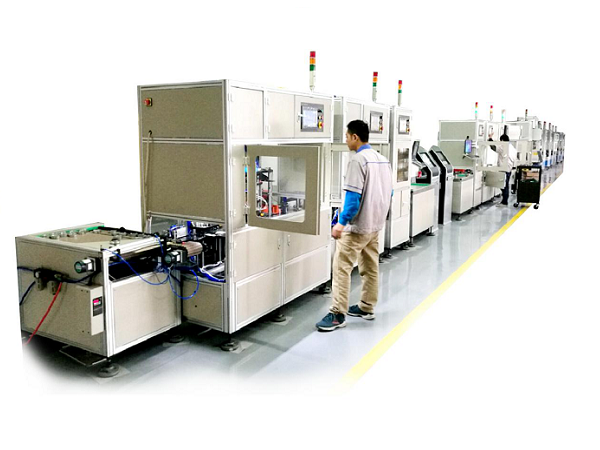
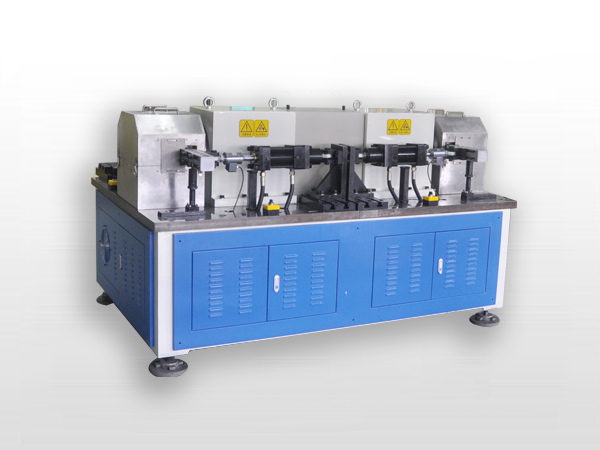
Automotive hub bearing testing machines are equipment designed to simulate high-temperature and unit operation conditions of automotive hub bearings under real vehicle operating scenarios. Based on the test data, they evaluate the comprehensive performance of automotive hub bearings, verifying their simulated operating conditions and service life. Let's explore the specific functions and performance of these testing machines in detail!
I. Functions of Automotive Hub Bearing Testing Machines
- Multi-Environment Simulation
The testing machine can simulate various operating environments for hub bearings, including variable rotational speed simulation and alternating load simulation, ensuring the authenticity and reliability of the simulation process.
- Automated Controlled Operation
Adopting advanced hydraulic-mechanical-electrical control technology, the testing machine enables reliable operation under full computer automation.
- Comprehensive Parameter Monitoring
It provides timely, effective, and reliable monitoring of various parameters during bearing operation, as well as real-time detection of bearing failure. Monitored parameters include axial and radial loads, test piece temperature, motor speed, current, and vibration.
II. Technical Performance Indicators of Automotive Hub Bearing Testing Machines
- Load Range:
- Model T15-50: Radial load 15KN (tensile), axial load ±10KN (tensile/compressive);
- Model T30-60: Radial load 30KN (tensile), axial load ±25KN (tensile/compressive);
- Control accuracy: ±2%; Zero-load control value: ≤0.05KN (steady state); System error: 0.02KN.
- Maximum Spindle Speed:
- Model T15-50: 2000rpm (frequency conversion speed regulation), error ≤±2%;
- Model T30-60: 1500rpm (frequency conversion speed regulation), error ≤±2%.
- Temperature Measurement Range: 0~200℃ (accuracy ±2℃); Ambient temperature: 130℃±5℃.
- Spindle Precision: Radial runout and end runout of the testing machine spindle ≤0.015mm.
- Test Scope: General durability tests for automotive hub units; Capable of testing 1 hub bearing unit at a time, supporting inner ring or outer ring rotation.
- Loading Method:
- Hydraulic loading, providing alternating tensile and compressive loads;
- Structural layout: Radial horizontal loading (tensile) and axial horizontal loading (tensile/compressive) for hub unit durability tests;
- Loading distribution: Axial and radial loads applied on both sides of the test piece; Axial force loaded via wheel radius;
- Stroke specifications: Radial loading cylinder stroke ±20mm; Axial loading cylinder stroke ±30mm;
- Arm adjustment range (wheel radius): 300mm (400mm for model T30-60).
- Loading Position Adjustment: Radial loading position adjustable according to the force line of different bearing models; Axial loading position (wheel radius) adjustable.
- Control System: Computer-controlled with closed-loop loading control.
- Parameter Setting & Protection:
- Parameters configurable via computer: Rotational speed, load, cycle steps (adjustable), cycle time, and automatic data storage interval;
- Protection functions: Automatic alarm and shutdown when motor current, vibration, or test bearing temperature exceeds limits;
- Real-time monitoring: Vibration, motor current, rotational speed, load, test time, and cycle times.
The above covers the functions and performance of automotive hub bearing testing machines. Kaiyuan Intelligence specializes in the R&D and production of various simulation/durability test equipment and high-precision testing instruments. For related product needs, please feel free to contact us via phone or message.
What Are the Bearing Detection Methods?
What Is Bearing Life?
Related Article