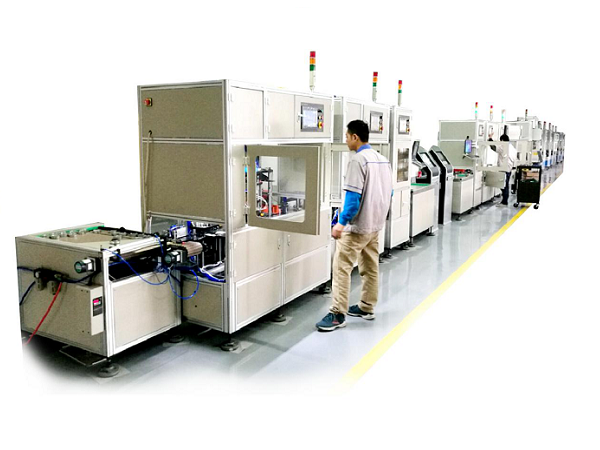
Test Procedures and Precautions for Bearing Testing Machines
The advent of bearing testing machines has accelerated the upgrading and renewal of bearing products. As an energy detection equipment, bearing testing machines assist enterprises in better analyzing raw materials, product performance, chemical properties, and physical characteristics during bearing production. Currently, they are widely used in the aerospace industry and the production of bearings for various automobiles. Many people are unfamiliar with the test procedures of bearing testing machines. Today, let's learn about the test procedures and precautions in detail.
I. Test Procedures of Bearing Testing Machines
- Set Preset Height
Lift the test bearing, fix it on the supporting arm, and maintain it in the preset test state. Then, raise the support to the required height position—the deviation between the actual height and the preset height shall not exceed ±2% of the preset height. The height refers to the distance between the impact tabletop and the lowest point of the test sample when released.
- Adjust to Preset Postures
(1) Face Impact: The angle between the impact face of the test sample and the horizontal plane shall not exceed 2°;
(2) Edge Impact: The angle between the impact edge and the horizontal plane shall not exceed 2°. The error of the angle between the specified face of the test sample and the impact tabletop shall not be greater than ±5° or 10% of the angle (whichever is larger), and the center of gravity line of the test sample shall pass through the impact edge;
(3) Corner Impact: The error of the angle between the specified face of the test sample and the impact tabletop shall not be greater than ±5° or 10% of the angle (whichever is larger), and the center of gravity line of the test sample shall pass through the impact corner.
- Align Center of Gravity Line
Regardless of the posture and shape of the bearing sample, the center of gravity line of the test sample must pass through the impact line, face, or point. The deviation between the actual impact speed and the free-fall impact speed shall not exceed ±1% of the free-fall speed.
- Record and Analyze Test Results
After the test, inspect the damage of the product and its internal contents in accordance with relevant standards or regulations, and analyze the test results.
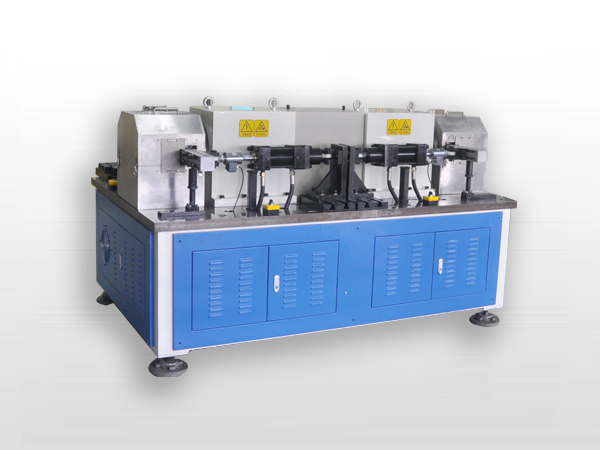
II. Precautions for Bearing Testing Machines
- Due to the large size of the test equipment (which usually cannot fit in elevators), it is recommended to place it on the first floor for convenient transportation.
- Prioritize safety during testing: Keep personnel at a safe distance, and do not place items near the impact tabletop. This prevents the supporting arm and items from retracting, which may affect test results or cause personal injury.
- Conduct regular maintenance on the test equipment to extend the service life of the bearing testing machine.
The above is an introduction to the test procedures and precautions for bearing testing machines. Since its establishment, Kaiyuan Intelligence has been rooted in the bearing industry and serves fields such as auto parts, railways, aerospace, military industry, and construction machinery. We specialize in intelligent detection and assembly equipment and line integration, test equipment and intelligent laboratory system integration, precision measuring instruments and intelligent metrology room system integration, as well as intelligent distribution/three-dimensional warehouses.
What Is Bearing Life?
What Is an MES System?
Related Article