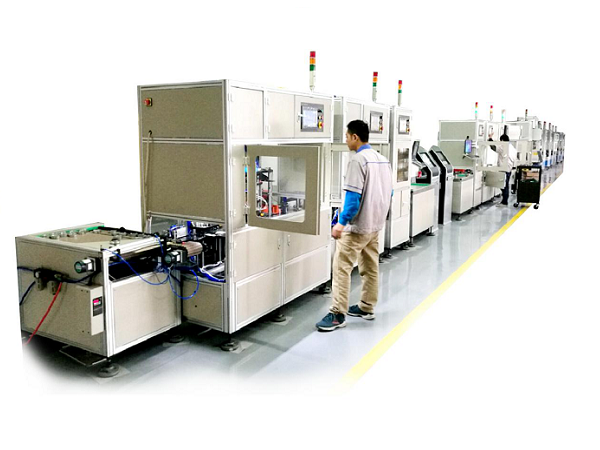
Test Types and Methods of Automotive Hub Bearing Testing Machines
To analyze the performance of automotive hub bearings and improve their service life and reliability, R&D personnel and users conduct various tests on automotive hub bearings. Today, the editorial team from Kaiyuan will explain the test types and methods of automotive hub bearing testing machines!
Test Types and Methods of Automotive Hub Bearing Testing Machines
1. Durability Test
Purpose: Evaluate the service life of hub bearing units under different driving conditions of automobiles.
Test Method:
- Pre-operation: Apply a radial load of W/2 to the test bearing and run it at 200r/min for 2 hours (this time is not included in the total test time).
Test Conditions:
- Set speed: 600r/min (tolerance ±5%);
- Ambient temperature: 20℃±15℃;
- Tightening torque: In accordance with user specifications;
- Real-time monitoring: Continuously monitor force, speed, vibration, and temperature during the test, and record and save each parameter value at appropriate intervals;
- Shutdown criteria: The test is stopped mainly based on the vibration acceleration value, and abnormal temperature is also used as a criterion for shutdown or bearing failure.
General Durability Test Results:
- Cool the test bearing sample after the test and initially check for jamming or spalling; manually inspect the rotational flexibility of the bearing.
- Disassemble the test bearing sample, observe if the grease has changed color; retain necessary photos, clean the grease leakage on the outer surface, weigh the sample, and record the data.
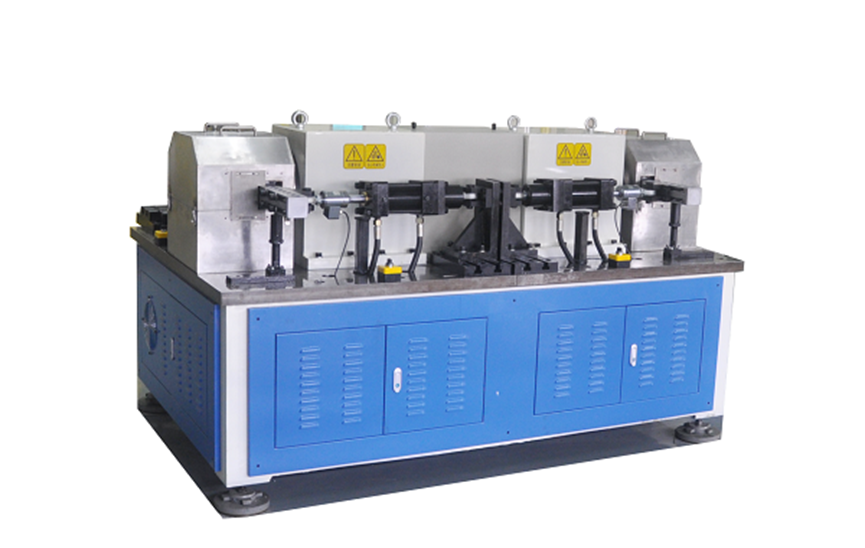
2. Muddy Water Performance Test
Purpose: Evaluate the sealing effect of hub bearing units in muddy water environments and during normal driving.
Test Method:
- Pre-operation: Apply a radial load of W/2 to the test bearing and run it at 200r/min for 2 hours to simulate pre-operation (this time is not included in the total test time).
- Tightening torque: In accordance with user specifications;
- Ambient temperature: 20℃±15℃;
- Muddy water ratio: 1L water + 50g salt + 125g Arizona test dust (conforming to the fine-grain ISO12103-A2 specification in GB/T 28957.1-2012). If the user specifies a muddy water ratio, the test shall be conducted according to the user's requirements.
Test Result Evaluation:
Disassemble the test bearing sample and observe if the grease has changed color.
3. Sealing Air Tightness Test
Purpose: Evaluate the sealing effect of hub bearing units under specific pressure conditions.
Test Method:
- Ambient temperature: 20℃±15℃;
- Tightening torque: In accordance with user specifications;
- Bearing state: Non-rotating;
- Test process: Tighten the inner ring of the hub bearing unit, do not press-fit one side; apply an air pressure of 196kPa from the side without the pressed seal ring and keep it airtight for 10 minutes (no air leakage allowed); press-fit the seal ring on the other side and apply soapy water to the seal ring side or immerse it in water; if the user specifies test conditions, the test shall be conducted according to the user's requirements.
Test Result Evaluation:
No air leakage is allowed during the test.
By now, you should have a clear understanding of the test types of automotive hub bearing testing machines. The application of these testing machines has improved the quality of hub bearings and is widely used by automobile manufacturers. Kaiyuan Intelligence has focused on the R&D of bearing testing machines for many years. If you have needs, please feel free to contact us for consultation!
Usage Methods and Operational Precautions of Bearing Testing Machines
What Is a Heavy-Duty Truck Wheel Hub Bearing Testing Machine? What Are Its Functions?
Related Article