What Is an MES System?
What Is an MES System?
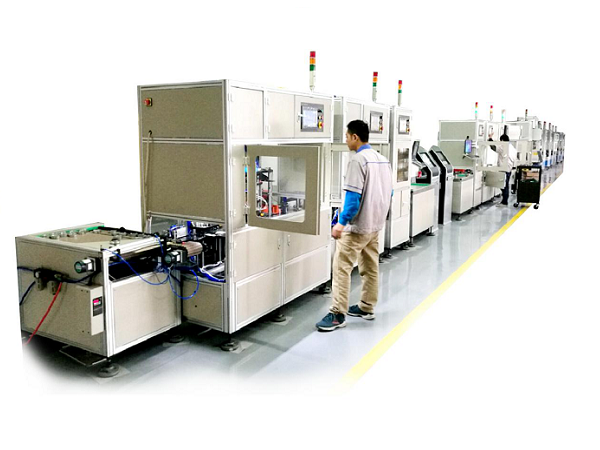
MES, short for Manufacturing Execution System, is a key component for enterprises to achieve production management informatization and a crucial link in transforming factories from "manufacturing" to "intelligent manufacturing". This new concept was proposed by the American management community in 1990, and later MESA (Manufacturing Execution Systems Association) defined MES as follows: MES can optimize and manage the entire production process from order placement to product completion through information transmission. When real-time events occur on the shop floor, MES can respond and report promptly, and guide and handle them with current accurate data.
MES is an important part of enterprises' production management informatization. Now that you know its definition, do you have a preliminary understanding of what an MES system is? Below, we will explore the MES system from multiple aspects.
MES systems transform traditional enterprises from relying on manual operations to efficient production methods. They reduce a large amount of labor during the production process, lower production costs, and realize optimized management of the entire production process through the integration of MES systems and supply management systems. MES systems immediately respond to and report real-time events occurring in the factory, while collecting and processing data. This mechanism enables MES systems to optimize meaningless activities within enterprises, effectively guide the production and operation processes of enterprises, improve efficiency, and enhance return on investment.
I. Classification of MES Systems
Traditional MES systems can be roughly divided into two categories: Specialized MES Systems and Integrated MES Systems.
(1) Specialized MES System (Point MES)
It is mainly developed to address specific field issues, such as shop floor maintenance, production monitoring, finite capacity scheduling, or SCADA (Supervisory Control and Data Acquisition).
(2) Integrated MES System (Integrated MES)
Initially designed for a specific, standardized environment, this type of system has now expanded to many fields, such as aerospace, assembly, semiconductors, food and hygiene industries. In terms of functions, it has achieved integration with upper-level transaction processing systems and lower-level real-time control systems.
II. Main Tasks of MES
- Organize and support all activities of the production process:
- Process requirements (work order processing, resource planning, quality requirements);
- Operational behaviors (ensuring the availability of resources, material flow, and quality);
- Tracking and analysis (inventory management, calculation of key performance indicators (KPIs), basis for continuous improvement processes such as Six Sigma and Operating Expenses (OpEx)).
- Realize the closed-loop of all behaviors related to the execution of production processes (planning, initiation, management, control, recording, evaluation, review, etc.).
- Information exchange with other levels, such as enterprise management level (Enterprise Resource Planning, ERP) and manufacturing/process level (Programmable Logic Controller, PLC; Distributed Control System, DCS), as well as operational support systems, such as Product and Process Engineering (P/PE) and Supply Chain Management (SCM).
Test Procedures and Precautions for Bearing Testing Machines
How Do Bearing Testing Machines Measure Bearing Dimensions? Introduction to Measurement Methods
Related Article