What Are the Bearing Detection Methods?
What Are the Bearing Detection Methods?
As an important component of mechanical equipment, the quality of bearings directly affects the normal operation of the equipment. Therefore, bearing detection becomes crucial. So, do you know what the bearing detection methods are?
I. Manual Detection
To determine whether a disassembled bearing can be reused, it should be inspected after cleaning. Carefully check the condition of the raceway surface, rolling surface, and mating surface, the wear of the cage, the increase in bearing clearance, and any damage or abnormalities that may reduce dimensional accuracy.
For non-separable small ball bearings, support the inner ring horizontally with one hand and rotate the outer ring to check for smooth operation.
For separable bearings (such as cylindrical roller bearings), the rolling elements and the raceway surface of the outer ring can be inspected separately. For large bearings that cannot be rotated by hand, pay attention to checking the appearance of rolling elements, raceway surfaces, cages, rib surfaces, etc. The more important the bearing, the more careful the inspection should be.
Large machinery cannot be rotated manually. Therefore, cut off the power immediately after no-load startup, let the machinery run idly, and check for vibration, noise, and contact between rotating parts. After confirming no abnormalities, proceed to power operation. Power operation should start from no-load and low speed, and gradually increase to the rated operation under the specified conditions.
During the test run, check for abnormal noise, changes in bearing temperature, leakage or discoloration of lubricants, etc. If any abnormalities are found, stop the operation immediately, inspect the machinery, and disassemble the bearing for inspection if necessary.
Another manual detection method: Take any bearing, hold the outer ring with one hand, and hold the inner ring with the other hand or fingers. Squeeze both hands firmly towards the center while rotating the bearing. If the bearing feels unsmooth within a 360-degree rotation or as if there is sand inside, it will inevitably have poor precision or high noise. Flip the bearing to the other side and check in the same way. Bearings tested by this method generally have relatively ideal results in terms of both precision and noise.
II. Visual Inspection
Check for the following defects:
- Fracture on either the ring or the rolling element;
- Significant scratches on the raceway surface, ribs, or rolling elements;
- Significant wear of the cage or obvious loosening of rivets;
- Rust or damage on the raceway surface or rolling elements;
- Severe indentations or dents on the raceway surface or rolling elements;
- Obvious creep on the inner diameter of the inner ring or the outer diameter of the outer ring;
- Obvious discoloration caused by heat;
- Obvious damage to the sealing ring or dust cover of bearings filled with grease.
III. Bearing Identification Steps
Identify bearings in five steps: 1. Outer packaging and certificate of conformity; 2. Steel stamp markings; 3. Overall condition; 4. Metal luster; 5. Sound. The detailed steps are as follows:
- Outer Packaging and Certificate of Conformity
Check if the outer packaging is clear and the certificate of conformity is standardized. Generally, genuine brand manufacturers have special designers to design the outer packaging and arrange factories with qualified production conditions to manufacture it. Therefore, the packaging is very clear in terms of lines and color blocks, without ambiguity.
- Steel Stamp Markings
Brand names, model numbers, and other markings are printed on the bearing body. Domestic steel stamp markings are very small. Genuine products are mostly marked with laser etching, and the stamping is done before the bearing undergoes heat treatment. Therefore, although the font is small, it is deeply engraved and very clear. In contrast, the font of counterfeit products is vague. Due to rough stamping technology, the font is superficial, and some can even be easily wiped off by hand.
- Overall Condition
Check for poor appearance quality, poor processing quality, or obvious circular runout. Bearings are precision mechanical products, and their surface roughness should be below 1.6 μm. Check for turbid oil stains: domestic bearings tend to leave thick oil stains, which feel sticky to the touch and have a distinct rust-preventive oil smell. Genuine imported bearings have almost no trace of rust-preventive oil. Verify the authenticity: check for obvious specification and model errors, such as a CAK bearing with a non-tapered inner hole or a 2RS bearing with only single-sided sealing.
- Metal Luster
The quality of a bearing depends on the steel quality and heat treatment level. The chamfers of bearings are not polished after heat treatment. High-quality bearings have smooth chamfers with a gray metal luster. Inferior products fall into two categories: one is counterfeit products made from high-quality domestic bearings, with smooth chamfers but no gray metal luster; the other is counterfeit products made from low-quality domestic bearings, with rough chamfers, collision marks, and no luster.
Bearing steel is divided into six categories: high-carbon chromium bearing steel, chromium-free bearing steel, carburized bearing steel, stainless bearing steel, medium and high-temperature bearing steel, and non-magnetic bearing steel. If rust spots are found, the material is defective. If severe collision marks are found, the material is defective. If the balls or rollers are of uneven thickness, the manufacturer has cut corners.
- Sound Inspection
Hold the inner ring of the bearing with your left hand and toggle the outer ring with your right hand to make it rotate, listening for any abnormal noise. Due to the backward production conditions of most counterfeit products, they will make abnormal noise when rotating. Completely manual workshop-style operation inevitably leads to impurities such as sand being mixed into the bearing during production, resulting in abnormal noise during rotation.
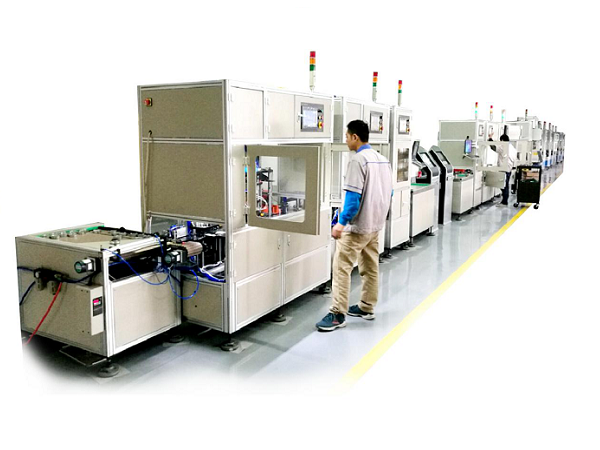
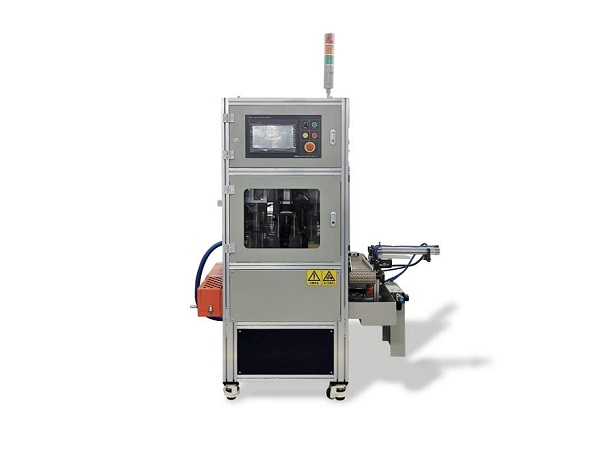
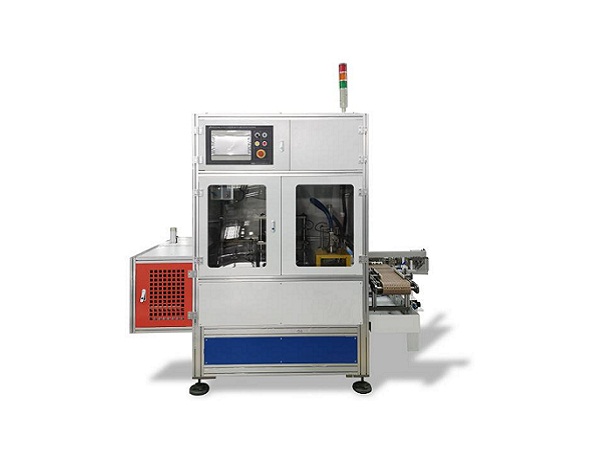
There are many bearing detection methods. Kaiyuan Precision Machinery specializes in the R&D and production of intelligent detection equipment and high-precision testing instruments for bearings and auto parts. Welcome customers to consult and learn more.
Types and Technologies of Bearing Testing Machines
Functions and Performance of Automotive Hub Bearing Testing Machines
Related Article