Common Forms and Testing Methods of Bearing Testing Machines
Common Forms and Testing Methods of Bearing Testing Machines
With the development of science and technology, more and more bearing-related products have been launched, and there are differences in the performance requirements for bearings. During the R&D stage of bearing products, it is necessary to test the structural performance of bearings to meet different performance requirements, identify weak links in the bearing's structure, product grade, materials, etc., and implement control measures. Below, Kaiyuan’s editor will introduce the common forms and testing methods of bearing testing machines.
I. Common Forms of Bearing Testing Machines
The common forms of bearing testing machines mainly include life tests, simulation tests, performance tests, bearing component tests, material tests, design verification tests, accelerated tests, etc.
(1) Life Test: A test to determine the fatigue life of bearings.
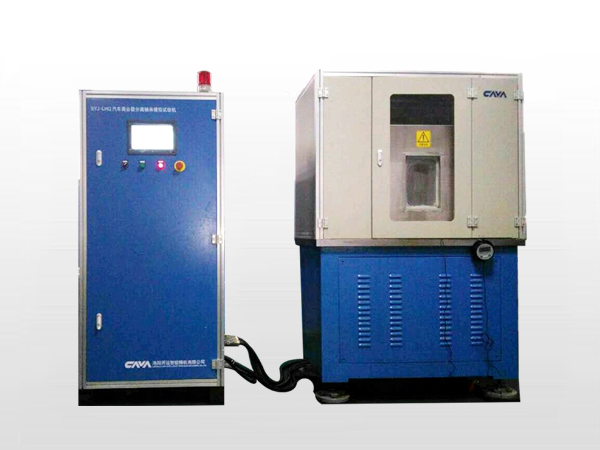
(2) Simulation Test: Conducted on a bearing testing machine by simulating the actual installation conditions and operating status of the bearing—i.e., setting parameters such as rotational speed, axial load, radial load, ambient temperature, and lubrication status according to real working conditions—and operating the bearing until it reaches the predetermined service life or fails. Common simulation tests include wheel hub bearing simulation tests, automotive clutch release bearing simulation tests, and automotive water pump shaft-connected bearing simulation tests.
(3) Performance Test: A test to assess specific properties of bearings, such as limiting speed tests, high-load tests, lubrication performance tests, dustproof tests, grease leakage tests, temperature rise tests, high-temperature tests, low-temperature tests, water spray tests, and bearing slip tests.
(4) Component Test: Primarily targets steel balls, rollers, and sealing rings.
Accelerated Test: A type of life test where a relatively large load (50% higher than the rated load) is applied to the test bearing to shorten the test duration.
Design Verification Test: Proposes design improvement suggestions based on bearing test data such as temperature rise, vibration, and noise.
II. Testing Methods of Bearing Testing Machines
Testing methods can be classified into full test, truncated test, time/count truncated test, group elimination test, sequential test, etc.
- Full Test: An entire group of bearing samples is tested under the same conditions until all samples fail.
- Truncated Test: A portion of a group of bearing samples is tested under the same conditions until the tested samples fail.
- Time/Count Truncated Test: A group of bearing samples is tested under the same conditions until a predetermined time (or number of failed samples) is reached, at which point the test is stopped.
- Group Elimination Test: A group of bearing samples is randomly divided into subgroups. Each subgroup is tested under the same conditions until one failed sample appears in each subgroup.
- Sequential Test: A group of bearing samples is tested under the same conditions, and failed samples are evaluated one by one in sequence.
III. Evaluation Criteria for Test Results
1. Life Calculation
The calculation of the basic dynamic load rating and rated life of bearings shall comply with the provisions of GB/T 6391―2003. The basic rated life L₁₀ is selected using the following formula; subsequent calculations include bearing load calculation, reliability (Rₑ) calculation, and qualification determination calculation.
Notes:
- Data of L₁₀ₜ (rated life under test conditions) and Rₑ shall be accurate to two significant figures.
- Qualification criterion: L₁₀ₜ/L₁₀ₕ ≥ Z´, where Z´=1.4 for ball bearings; Z´=1.2 for roller bearings and self-aligning ball bearings.
Based on quality requirements, qualification evaluation is conducted as follows. For long-life tests, the test report shall also specify the value of the qualification multiple achieved.
a) Verification Test: Qualified if the qualified life is achieved.
b) Qualification Test: Qualified if 3 times the qualified life is achieved.
2. Failure Determination
A bearing shall be deemed to have failed if it malfunctions or cannot operate normally during the test.
3. Fatigue Failure
Fatigue failure is the main failure mode of bearings, referring to fatigue spalling of the base metal on the working surfaces of the bearing ring or rolling elements.
- Spalling depth ≥ 0.05 mm;
- Spalling area: ≥ 0.5 mm² for ball bearing components; ≥ 1.0 mm² for roller bearing components.
4. Other Failures
Including bearing component disassembly, fracture, jamming; seal deformation; grease leakage or drying, etc.
The above is the introduction to the common forms and testing methods of bearing testing machines. Bearing testing machines cover a broad scope, including multiple test directions such as life testing and performance testing. As a manufacturer of bearing testing machines, Kaiyuan R&D and produces various series of bearing testing machines with diverse functions. If you have needs, please feel free to call for consultation.
Types and Directions of Bearing Testing Machines
Functions and Components of Bearing Testing Equipment
Related Article