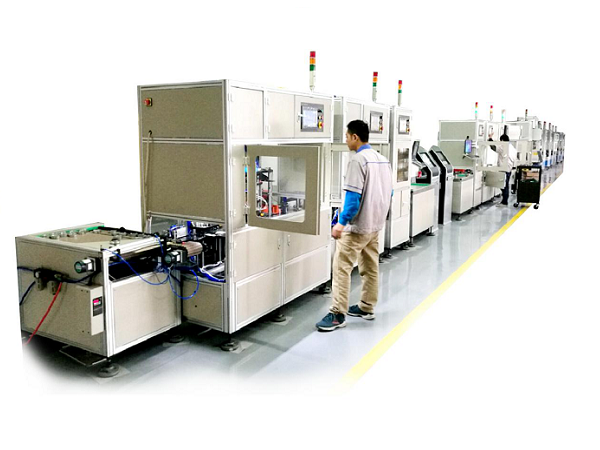
Principle and Parameter Setting of Automotive Wheel Hub Bearing Testing Machine
Automotive wheel hub unit test equipment simulates vehicle operation to detect the performance of automotive wheel hubs, and it can test wheel hubs of various types of vehicles. The product quality of automotive wheel hubs affects the overall performance of automobiles. Therefore, the demand for automotive wheel hub bearing testing machines is increasing in the automotive production industry. Today, we will explore the principle and parameter setting of automotive wheel hub bearing testing machines.
I. Principle of Automotive Wheel Hub Bearing Testing Machine
1. Test Types
The automotive wheel hub simulation testing machine operates by simulating the operation mode and installation structure of automobiles. It can test bearings with two inner diameter ranges: Φ15—45mm and Φ30—70mm. It is applicable to first-generation, second-generation, and third-generation automotive wheel hub bearings, as well as wheel hub bearings for SUVs, passenger cars, large buses, etc.
2. Test Range
The rotational speed of the automotive wheel hub bearing testing machine can reach 2500 rpm and 1500 rpm; the maximum load can reach 20KN and 50KN; the temperature measurement range is 0-200℃ with an accuracy of ±2℃, and the ambient temperature is 150℃±5℃. The radial runout and end runout of the testing machine's main shaft do not exceed 0.015mm, enabling either the inner ring or outer ring to rotate.
3. Hydraulic Loading
It adopts a hydraulic loading method to provide alternating tension and pressure loads, with a structural layout of radial horizontal loading (tension) and axial horizontal loading (tension and pressure). It conducts wheel hub unit performance tests (general durability tests), where the axial force is applied based on the wheel radius.
4. Axial and Radial Loading
Axial and radial loading are distributed on both sides of the test specimen. The stroke of the axial loading cylinder is ±30mm, the moment arm adjustment range (wheel radius) is 300mm or 400mm, and the stroke of the radial loading cylinder is ±20mm. The radial loading position can be adjusted according to the force line of different types of bearings, and the axial loading position (i.e., wheel radius) is adjustable.
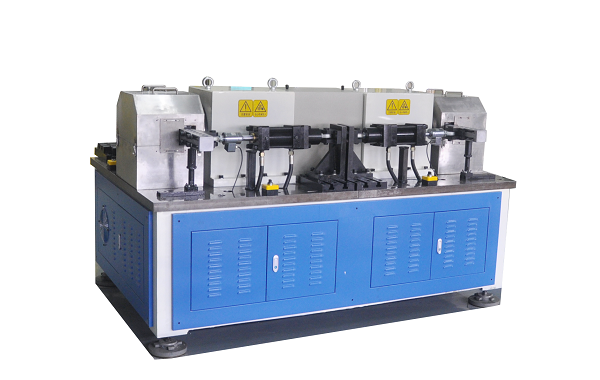
II. Parameter Setting of Automotive Wheel Hub Bearing Testing Machine
The control system adopts computer control, and the loading uses closed-loop control. The system parameters are set in the computer parameter setting window, including rotational speed, load, number of cycle steps (can be set arbitrarily), automatic data storage time of cycle duration, etc. The system can monitor test vibration, motor current, rotational speed, load, test time, number of cycles, etc., and is equipped with automatic alarm functions for over-limit conditions such as motor current, testing machine vibration, and test bearing temperature.
The above is the introduction by Kaiyuan’s editor about the principle and parameters of the automotive wheel hub bearing testing machine. There are various types of automotive bearing testing machines, such as clutch bearing testing machines for simulating automotive clutch bearings, and automotive water pump shaft-connected bearing testing machines. Since its establishment, Kaiyuan Intelligent has been rooted in the bearing industry, serving fields such as auto parts, railways, aerospace, military industry, and construction machinery. It specializes in intelligent testing and assembly equipment and connection lines, test equipment and intelligent laboratory system integration, precision measuring instruments and intelligent metrology room system integration, and intelligent distribution.
Operation Process and Detection Content of Bearing Testing Machines
Detection Principle and Structural Characteristics of Automotive Release Bearing Test Equipment
Related Article